Professional sanitation and food safety professionals in Brampton support food establishments, food centers, bakeries, warehouses, and mobile food services maintaining standards. They sanitize regularly touched surfaces, food contact areas, equipment, floors, drains, restrooms, and food handling spaces using certified products, at correct dilution, and documenting contact times. You need scheduled cleaning determined by risk, food throughput, food allergies, and inspections, plus documented proof that support HACCP, audits, and regulatory adherence. The sections below explains how effective cleaning systems must contain.
Main Points
- Sanitation experts in Brampton serve restaurants, grocery departments, commissaries, warehouses, bakeries, schools, mobile vendors, and allergen-sensitive operations.
- They disinfect high-touch surfaces, food-contact equipment, kitchens, floors, drains, restrooms, and storage areas using area-specific procedures to avoid cross-contamination.
- Proper chemical concentration, compatibility, and contact time are validated by certified vendors, with finalization documented via samples, inspections, and corrective-action records.
- Sanitation calendars must adhere to danger, production rate, format changes, spills, and regulations, with regular, recurring, and annual tasks designated by area.
- Coverage, coded implements, hazard analysis knowledge, sanitation knowledge, safety training preparation, references, and audit-ready sanitation paperwork are essential supplier attributes.
Food Safety Cleaning Requirements for Brampton Facilities
Any Brampton facility that handles, maintains, prepares, packages, or offers food needs food sanitation. You must follow it if your facility falls under health inspection, premises standards, or HACCP protocols. That requirement covers food service venues, employee cafes, supply centers, retail departments, meat shops, fish areas, local stores, and institutional food prep areas.
You also need compliant food safety cleaning in distribution centers, food processing plants, freezer facilities, commercial bakeries, educational nutrition programs, event spaces, and catering hubs. Portable and seasonal businesses count too, including catering trucks, festival vendors, and pop-up food booths. If your staff work with raw supplies, divide prepared foods, warm dishes, or organize allergen inventory, your facility needs established sanitation documentation. In Brampton, sanitation isn't discretionary; it's part of regulatory, business, and safety compliance.
What Do Brampton Cleaning Experts Clean?
Professional cleaning services specializing in Brampton sanitize touched surfaces, food preparation areas, floors, and sanitary facilities in compliance with food safety regulations. Focus on these locations stems from extreme cross-contamination risk, potential for accidents, and compliance issues.
Understanding their cleaning procedures enables you to validate your facility's cleaning meets operational demands and regulatory compliance.
High-Touch Surface Sanitizing
Addressing high-touch surface sterilization is vital for Brampton maintenance experts because these surfaces can transmit harmful organisms and food particles around a location. You need a scheduling system for sanitizing all high-touch items including handles, plates, switches, railings, control surfaces, POS systems, and refrigeration equipment. Implementing area assessment techniques, teams determine every frequently handled zone and assign cleaning intervals
technical guidelines and regulatory standards to ensure efficacy. Staff can employ sample analysis to verify sterilization efficacy
Cooking Zones, Walking Surfaces, and Restroom Environments
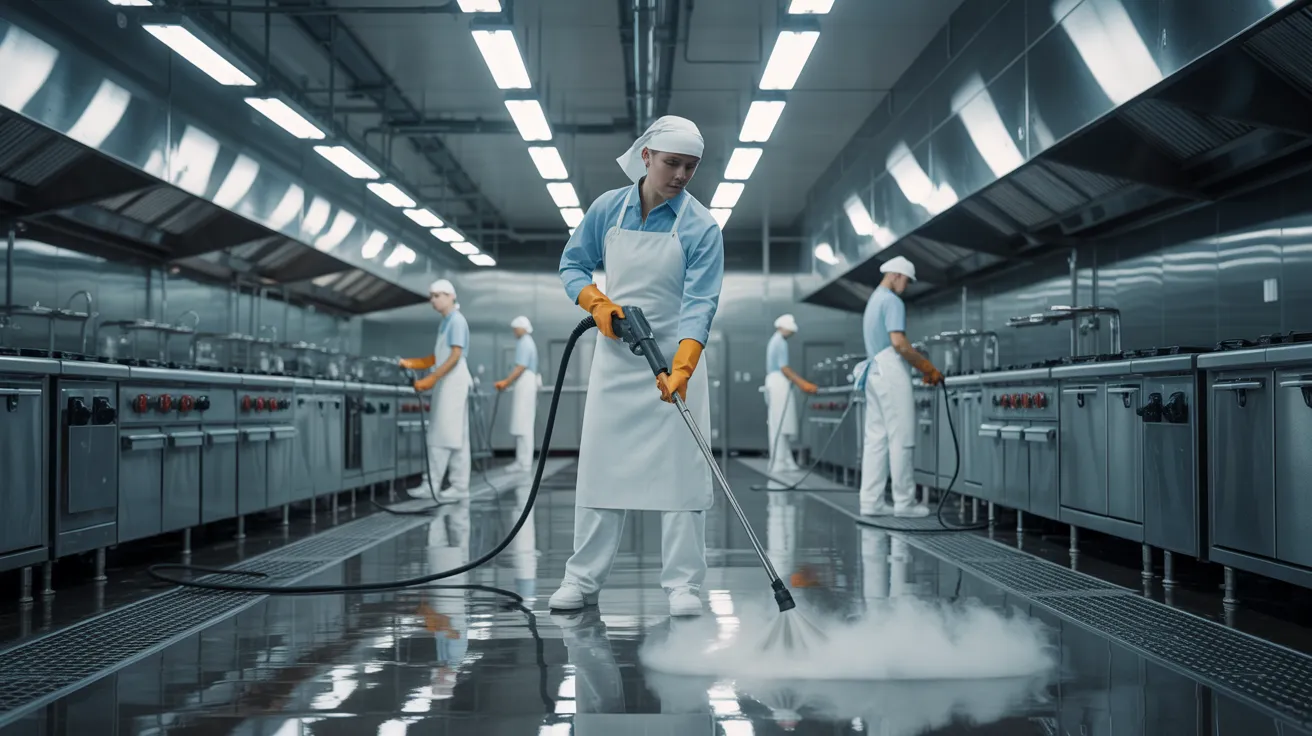
Expect Brampton cleaning experts to focus on kitchens, floors, and restrooms because each area carries distinct foodborne illness prevention, slip-and-fall, and public health risks. In industrial kitchens, you need degreasing on cook lines, equipment exteriors, drains, prep surfaces, and splash zones to reduce contamination and pest pressure.
You should also expect documented flooring maintenance. is likewise provided as part of the service.
In restrooms, cleaners treat touchpoints, fixtures, partitions, dispensers, and waste containers then restock supplies and control odours. They also service restaurant moprooms, where chemical storage, sink hygiene, and drainage conditions can affect sanitation compliance and staff safety daily.
Why Food Safety Cleaning Matters in Brampton
Brampton operations require food-safe cleaning standards to meet compliance obligations and pass inspections. You also reduce cross-contamination by cleaning and sanitizing food-contact surfaces, equipment, and high-touch areas correctly. Most importantly, you safeguard community wellness by reducing the chance of food poisoning in your establishment.
Regulatory Code Requirements
Food operations in Brampton face mandatory safety protocols, making food safety cleaning essential to fulfilling health code requirements, defending patrons, and sidestepping enforcement action. You must maintain sanitized food contact points, documented cleaning schedules, correct sanitizer application, and verifiable staff procedures that correspond to municipal and provincial inspection expectations.
During regulatory assessment of your operation, officials assess whether your sanitation system facilitates safe storage, appliance cleanliness, refuse management, and facility cleanliness. Strong cleaning records allow you to show due diligence during official assessments and prove that your procedures are standardized, reproducible, and monitored.
Contamination Prevention
Maintaining health code standards copyrights on your power to stop cross-contamination during everyday food preparation and sanitation. You must separate raw ingredients from ready-to-eat foods, sanitize prep surfaces between tasks, and position cleaning agents away from food surfaces. Clear procedures reduce transfer risks and reinforce steady regulatory adherence.
Implementing allergen separation helps keep priority allergens from contacting shared surfaces, containers, or equipment. Utilize separate boards, color-labeled items, and strict utensil labeling so workers don't combine products during preparation or service. Enforce hand hygiene following raw meat, seafood, eggs, or allergen-containing products. Refresh cleaning cloths often, and validate disinfectant levels using test strips. When your team learns these guidelines every shift, you create a cleaner, safer operation that satisfies Brampton's food safety needs regularly.
Community Health Protection
When food safety cleaning weaken, you don't only face inspection setbacks—you raise the likelihood of foodborne illness affecting customers, staff, and the larger Brampton community. You also undermine your responsibility in protecting public health, especially in high-traffic food premises where contamination can spread quickly through surfaces, equipment, and touchpoints.
You depend on sanitation protocols that remove soils, effectively sanitize, and ensure effectiveness. This entails adhering to exposure times, deploying approved disinfectants, maintaining records, and training employees to meet health-unit expectations. These initiatives promote disease prevention by reducing microbes before affecting food surfaces or hands. In Brampton, robust sanitation protects at-risk groups, minimizes disease spread, and demonstrates accountability. When you maintain standards, you go beyond regulations—you substantially reduce risk and advance safer food handling throughout the city.
How Can Cleaning Practices Ensure Food Safety Compliance?
Rigorous cleaning routines support food safety compliance by lowering contamination exposure, controlling pathogen growth, and maintaining your facility's adherence to sanitation requirements under HACCP-based programs and public health regulations. You confirm that food-handling surfaces stay visibly clean and microbiologically controlled, supporting documented preventive controls and inspection readiness.
Well-executed cleaning efforts also reinforce allergen management by eliminating residues that can trigger undeclared allergen exposure.
When Ought You Plan Commercial Cleaning?
maintenance activities.
monthly timings for drains, vents, storage racks, and hard-to-reach equipment zones, according to inspection results and sanitation logs.
Selecting the Right Brampton Cleaning Experts: Key Considerations
Screen providers initially by their food hygiene standards—not budget alone. You detailed article need to verify that every company meets CFIA, public health, and HACCP-aligned expectations for your operation. Demand proof of insurance, WHMIS compliance, training records, and management systems. Evaluate technician understanding of cross-contamination risks, chemical safety, and documented sanitation practices.
Additionally, you need to evaluate operational reliability and responsibility. Obtain references from Brampton food operations, then review response times, corrective-action procedures, and communication standards. Verify the company supports supplier audits and can deliver inspection-ready documentation when inspectors or external parties need proof. Verify equipment is maintained, colour-coded tools are applied correctly, and site-specific hazards are identified. A capable service ensures compliance, product integrity, and your brand reputation.
What details should a sanitation plan contain?
Put together a written program that establishes every sanitation task, standard, and responsibility before production begins. You should list cleaning intervals, permitted substances, dilution percentages, exposure times, instruments, and inspection methods for each sector, surface, and equipment. Make sure to include pre-operational inspections, corrective actions, and employee training requirements.
Your framework should also include cross-contamination prevention, waste disposal, pest management measures, and scheduled documentation for bathrooms, drainage, ground surfaces, and food-handling zones. Specify how you'll distinguish raw from ready-to-eat operations, support ingredient tracking, and copyright accurate allergen labeling through validated cleaning between product changes. You should define accountability, maintain signed records, and review results against regulatory standards, HACCP controls, and customer requirements. When gaps appear, adjust procedures immediately and retrain staff.
Commonly Asked Questions
Are cleaning services available for overnight shifts in Brampton facilities?
Yes, you can set up cleaning services to handle overnight shifts in Brampton facilities. You'll manage overnight sanitation around operational windows, access requirements, and personnel requirements. Providers generally establish overnight procedures to minimize interruption, copyright compliance, and document finished tasks. You should confirm timeframes, oversight, access procedures, and disposal methods before service starts.
Will Brampton cleaning experts respond to hazardous incidents?
Yes, you can locate several Brampton cleaning professionals offering emergency response services. They manage hazardous materials, evaluate risks, isolate zones, and perform swift decontamination to minimize risk and prevent disruption. You should confirm timeframes, certifications, safety measures, and procedures. If your facility needs compliance, choose a service that logs events, maintains standards, and supports audits.
Do green disinfectants operate safely on food-handling equipment?
Definitely, eco-friendly disinfectants perform safely on food-handling equipment if you source solutions certified for food use that satisfy regulatory requirements. You need to verify exposure duration, concentration levels, and rinse protocols before use. Plant-derived products reduce toxic chemical contact, but you must have proof of efficacy against target microorganisms. To keep surfaces residue-free, adhere to manufacturer directions precisely and ensure your disinfectant complies with applicable food industry sanitation standards.
Can cleaning schedules be tailored for production fluctuations?
Certainly, sanitation programs adapt to seasonal shifts effectively. Modify schedules, staff levels, sanitizers, and confirmation procedures to correspond with seasonal patterns while upholding regulatory requirements. Limit equipment downtime via planning cleaning amid changeovers, peak volumes, and usage patterns. Concurrently update procedural documents, instruction programs, and environmental monitoring to capture transient threats, emerging allergens, or higher contamination levels. Regular reviews ensure the schedule efficient.
Do commercial cleaners train staff on hygiene standards?
Absolutely, professional cleaning companies regularly deliver staff training on hygiene standards. Your team receives instruction on correct chemical handling, contact times, contamination avoidance, machine takedown, and paperwork. They generally match guidance with HACCP, GMP, and CFIA or regional health authority standards. Many also perform health inspections to ensure adherence, identify gaps, and reinforce corrective actions. This enables you to sustain consistent procedures, pass inspections, and lower contamination dangers consistently.
Conclusion
Through working with Brampton food safety and commercial cleaning experts, you accomplish much beyond organizing—you keep your operation prepared for audits and your procedures meet requirements. From production floors to kitchens, all clean areas and organized zones help prevent pest problems and prevent significant costs. Through scheduling maintenance at proper intervals and sticking to a solid cleaning plan, you safeguard your team, clients, and your standing. In a tightly controlled regulatory landscape, clean conditions must be a priority—they are fundamental to success.